Sustainable Pet Products: What "Eco" Really Means in 2026
How should buyers use this article?
Sustainable Pet Products: What "Eco" Really Means in 2026 is a PetProcure product knowledge resource for B2B buyers comparing pet product sourcing, OEM/ODM, sampling, QC, packaging, compliance, logistics, and launch planning decisions. B2B buyers need to separate greenwashing from real sustainability. A 2026 breakdown of materials, certifications, and packaging rules driving pet product procurement. Use the article to clarify what information to ask a factory or sourcing partner before committing to a sample, tooling, purchase order, or repeat procurement plan. Final product terms still depend on the buyer's target market, MOQ, customization scope, material requirements, certification needs, packaging plan, and delivery schedule.
"Sustainable pet products" is one of the most overused phrases in our category. Retail buyers and private label brands keep telling us the same thing: "Every supplier says their pillow is recycled. Nobody can show me how much." This article gives you the vocabulary and the paperwork you should expect when sourcing sustainable pet products in 2026.
1. Materials that actually earn the label
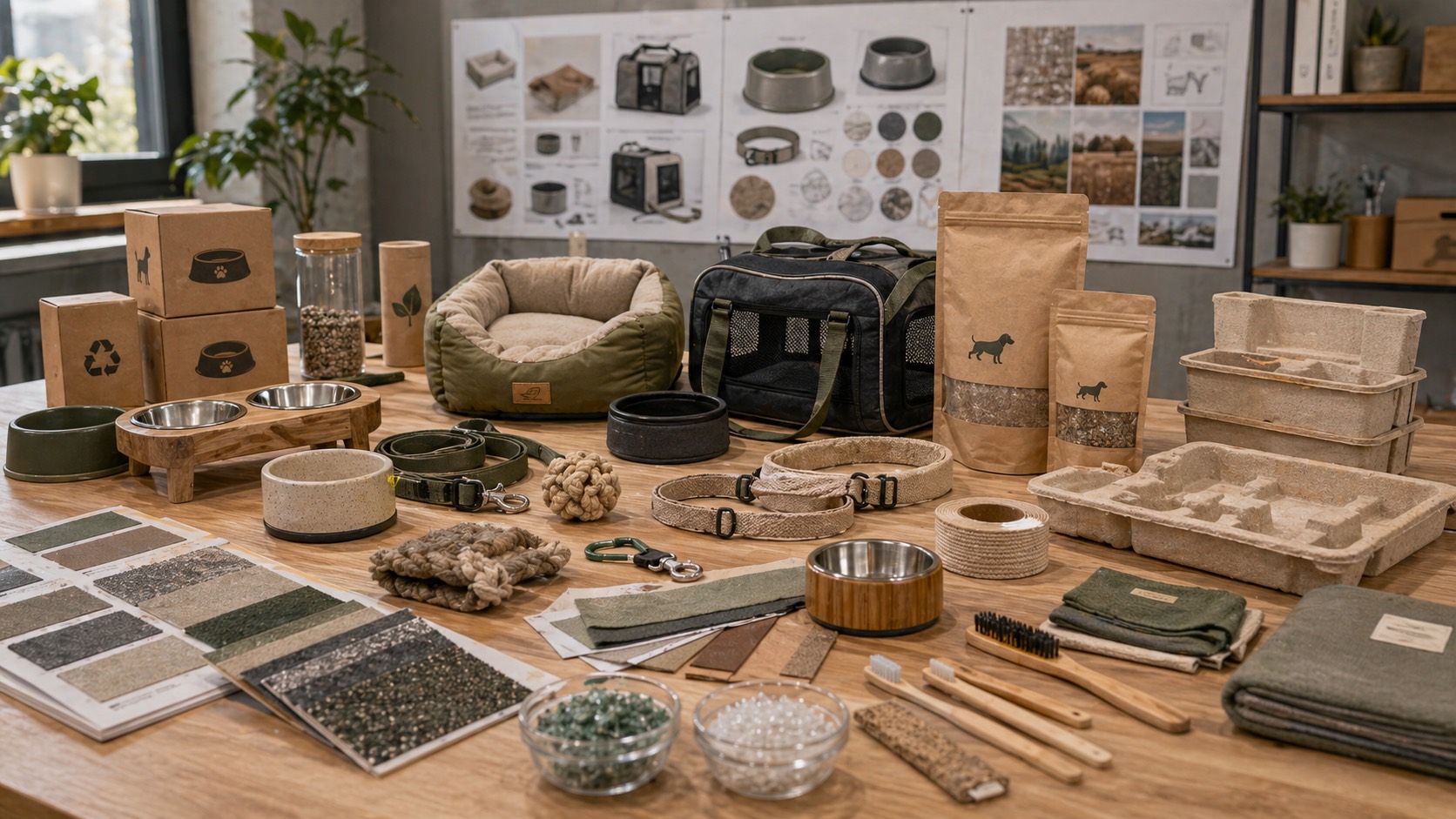
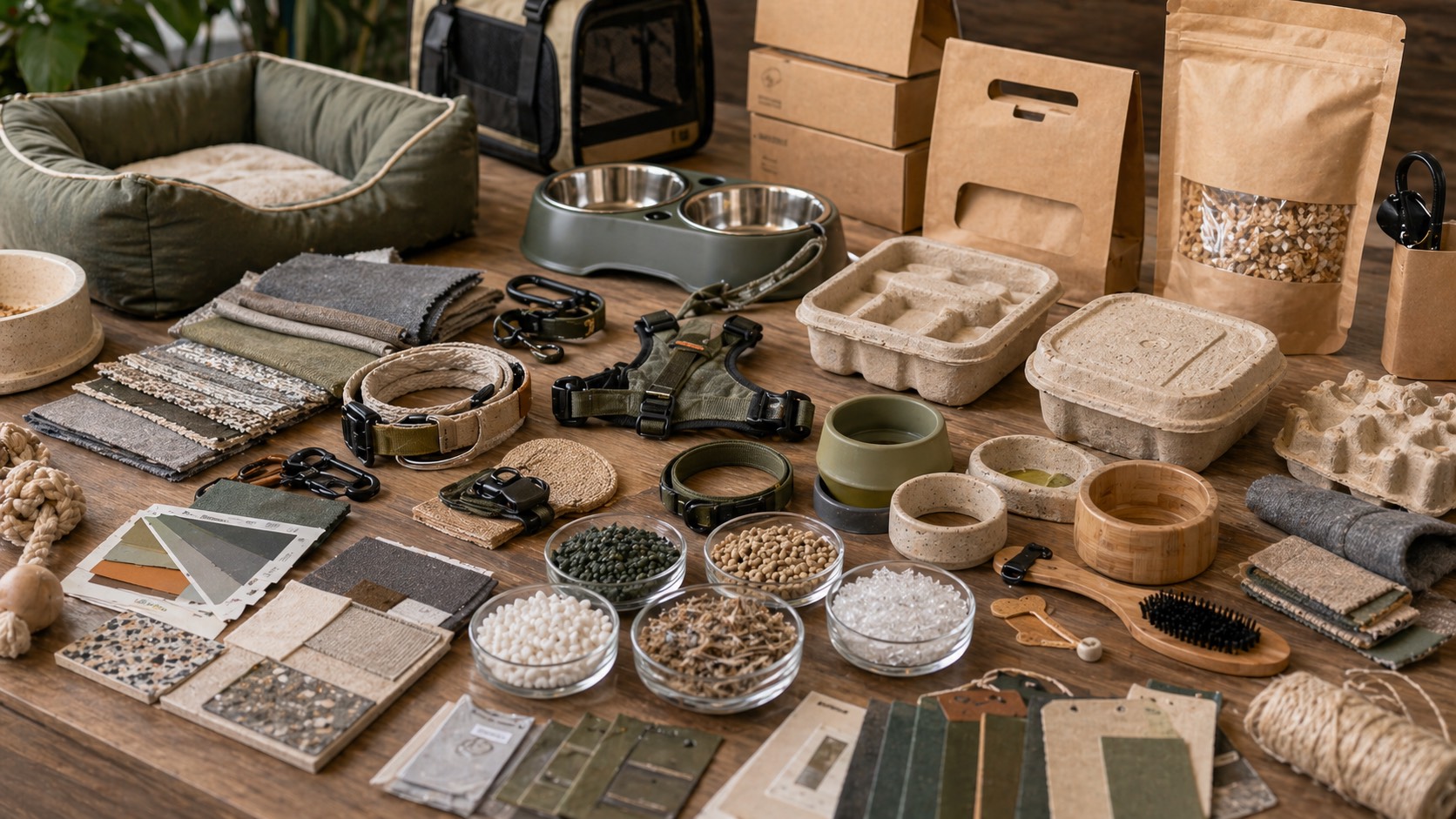
- rPET (recycled polyester) — most common for bed covers, carrier liners and apparel. Look for GRS (Global Recycled Standard) certification with a transaction certificate tying the order to a specific mill.
- Organic cotton — good for low-impact bedding and plush toys. Expect GOTS or OCS certification.
- Hemp & linen — hard-wearing, biodegradable, increasingly used in leashes and harnesses.
- Bamboo (mechanical pulp) — excellent for bowls, litter scoops, brush handles. Note: "bamboo viscose" textiles are chemically processed; label honestly.
- Corn-starch bio-plastics (PLA / PBAT) — great for poop bags and disposable liners. Compostability varies (industrial vs home compostable).
- Natural rubber & cork — perfect for toys, mats and eco-friendly grip surfaces.
- Recycled nylon (ECONYL®) — premium option for harnesses and collars, made from ocean-bound waste.
2. Certifications you should insist on
- GRS / RCS — recycled content claims.
- OEKO-TEX STANDARD 100 — textile chemical safety. Non-negotiable for pet beds shipped to the EU.
- FSC — paper and wood (packaging, chew toys, scratching posts).
- OCS / GOTS — organic cotton.
- BPI / TUV OK Compost — compostable plastics.
- Cradle to Cradle Certified® — system-level certification, prestige for premium brands.
- ISO 14001 — the factory's environmental management system.
3. Packaging rules are catching up
The EU Packaging and Packaging Waste Regulation (PPWR) is the big one. From 2027–2030 it phases in mono-material design, recycled content minimums, reusable transport packaging, and EPR fees. If you sell pet products into the EU, packaging must be audited and redesigned now — not 2028. In the US, California SB 54 sets its own timeline for post-consumer recycled content and extended producer responsibility; Oregon, Washington and Colorado have similar frameworks.
- Switch to mono-material PE or PP retail bags.
- Eliminate plastic windows; use die-cut openings on kraft boxes.
- Specify 30–70% PCR content in mailer bags.
- Use FSC kraft insert trays instead of EPE foam.
- Drop PVC from any carrier or harness packaging.
4. What sustainability looks like on a spec sheet
A credible sustainable SKU spec should include: material list with % PCR, chemical treatment list, packaging list with GSM and recyclability notes, carbon footprint estimate (optional), end-of-life disposal instructions, and certificate numbers with test-lab IDs you can verify.
5. Don't fall for these greenwashing patterns
- "Eco-friendly" with no spec — meaningless.
- "Made from recycled materials" without a percentage.
- A single test report used across 30 SKUs.
- "Biodegradable" claims with no standard cited (ISO 14855? ASTM D6400?).
- Packaging that swaps one plastic for another plastic and calls itself "sustainable".
6. Our approach
At PET & TRADE we publish a material disclosure sheet with every SKU in our Sustainable Home and Sustainable Travel lines. It shows materials, percentages, certifications and recyclability codes. Request one below and we'll include our 2026 EU PPWR readiness plan.
Request a Sustainability Spec Sheet
Get the material disclosure, certification pack and PPWR readiness plan for any SKU in our Sustainable Home or Sustainable Travel line.
Contact our sustainability team →