How to Source Pet Products from China in 2026: A B2B Buyer's Checklist
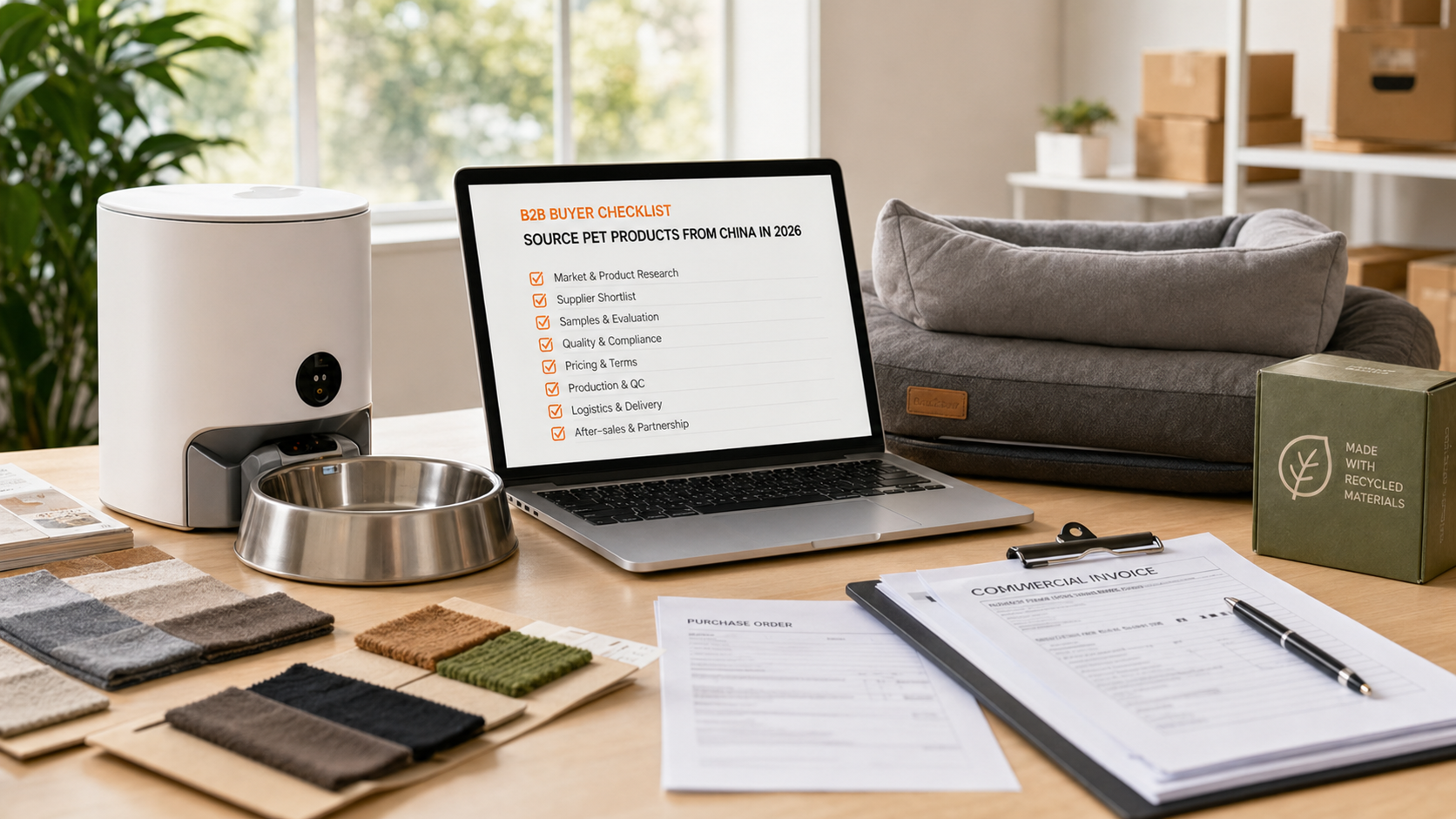
China still makes the majority of the world's pet products — from smart feeders and orthopedic beds to FSC-packaged carriers and stainless bowls. But in 2026, the sourcing game has changed: EU PPWR packaging rules are landing, US tariff treatment keeps shifting, and buyers want sustainability and smart features on the same PO. This checklist is how we recommend B2B buyers approach the market this year.
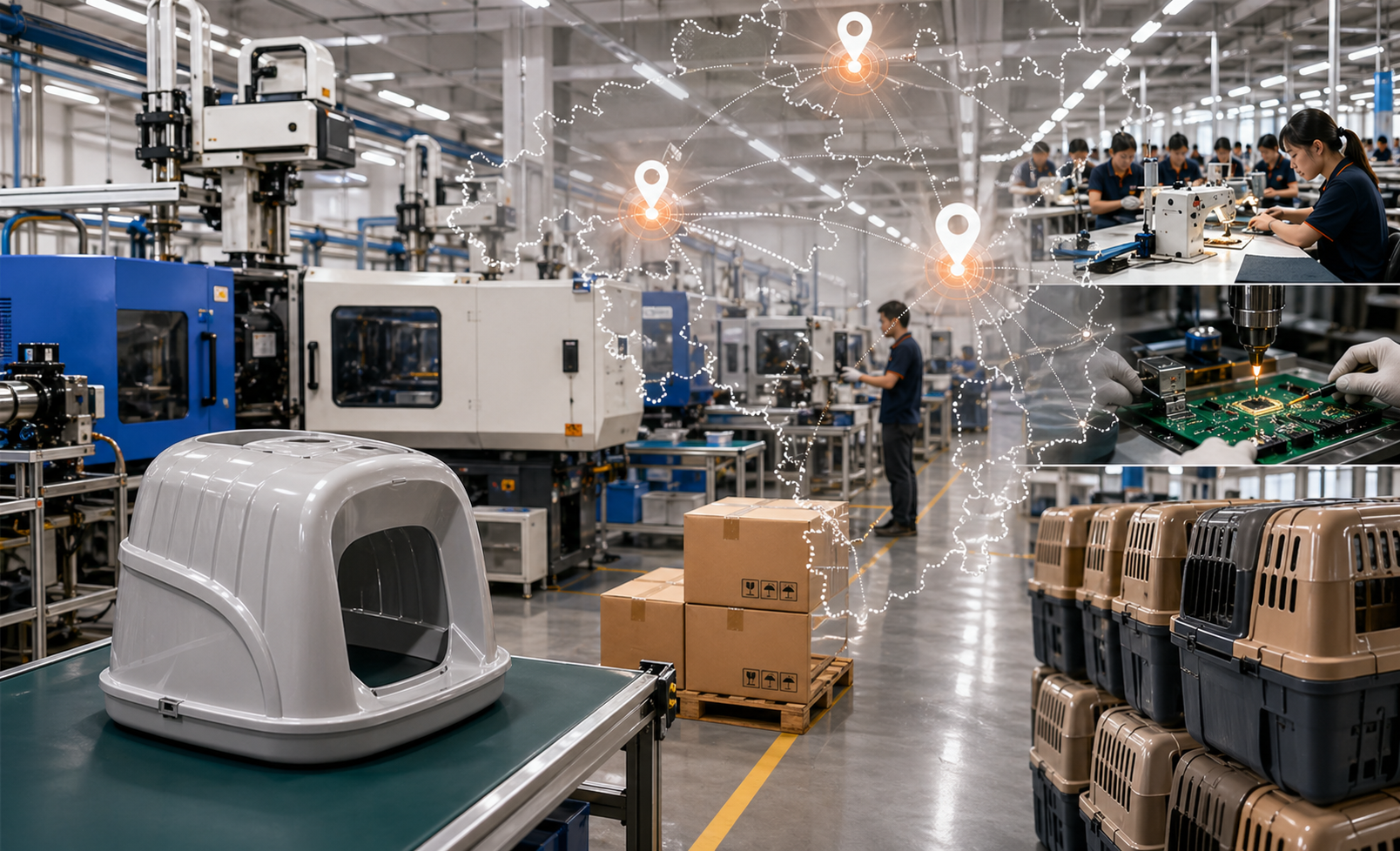
1. Why China still leads pet manufacturing
Three things sit behind China's continued dominance: vertically integrated supply chains (foam, textiles, injection plastic, PCBA and app development within two hours of each other in the Yangtze River Delta), a mature export ecosystem (forwarders, labs, Amazon FBA agents) and fast tooling cycles. The pet category is still largely tooling-driven — moulds move, suppliers keep up.
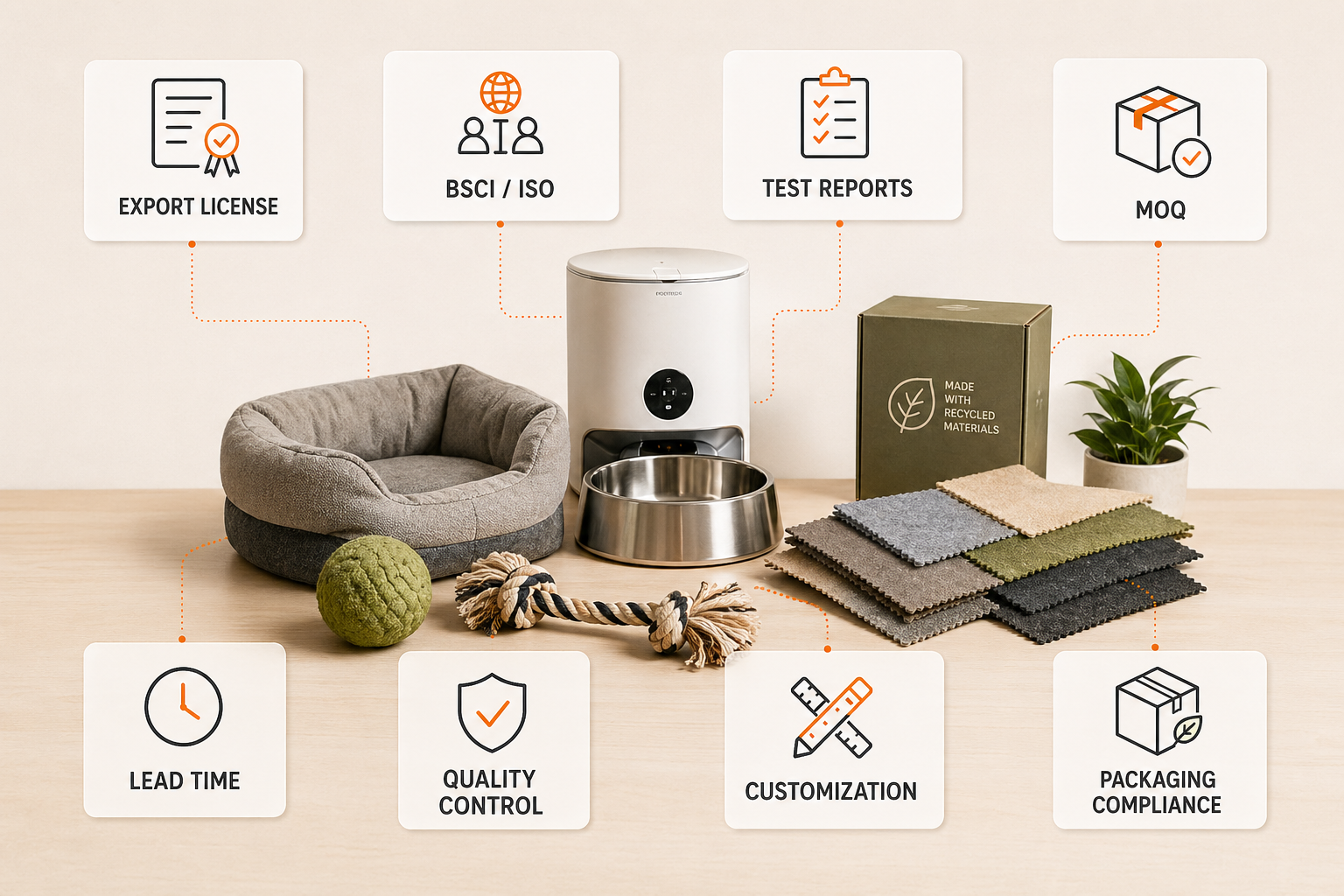
2. 8 criteria to shortlist suppliers
- Category specialization — does the factory make your product line, or is it a trader in disguise?
- Audit profile — BSCI, Sedex SMETA 4-pillar, ISO 9001, ISO 14001.
- Regulatory track record — CE, FCC, FDA food-contact, CPC, CA Prop 65, UKCA.
- Engineering depth — in-house ID / ME / EE / firmware teams, or outsourced?
- Capacity transparency — production area, SKUs, monthly output, currently booked slots.
- MOQ + tooling policy — published ranges, not "case-by-case".
- Sample workflow — how long, how priced, how it refunds against bulk.
- References — retailers, DTC brands, distributors (even anonymized is fine).
3. MOQ & lead time benchmarks by category (2026)
| Category | MOQ / SKU | Tooling (USD) | Lead time |
|---|---|---|---|
| Soft goods (beds, carriers, apparel) | 300–500 | — | 30–40 days |
| Injection plastic (bowls, litter, feeders w/o electronics) | 500–1,000 | 800–4,000 | 35–45 days |
| Smart electronics (Wi-Fi / camera / GPS) | 500–1,000 | 5,000–15,000 | 45–60 days |
| Private label (existing SKU, buyer logo & packaging) | 100–300 | — | 20–30 days |
4. Red flags to avoid
- A factory that refuses to share its BSCI / SMETA report under NDA.
- A supplier whose "certification" is a test report for a similar SKU, not the one you're buying.
- "We can do any MOQ" — usually means trader, not factory.
- Lead times that do not account for Chinese New Year (late Jan / early Feb) or National Day (Oct 1–7).
- No willingness to quote DDP, or a freight quote that locks for 30+ days (sea freight moves weekly).
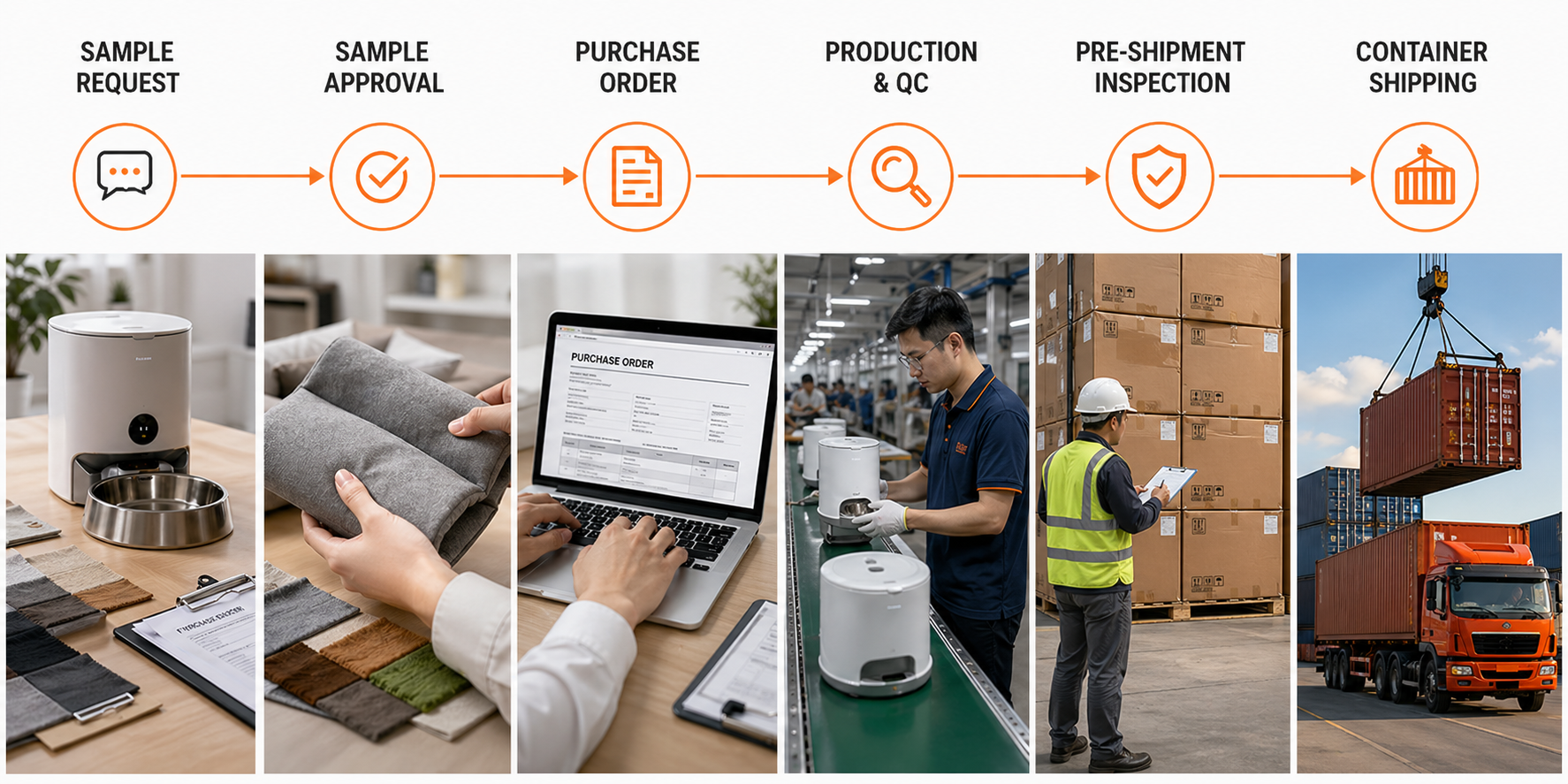
5. Sample-to-PO workflow
A healthy flow looks like this:
If any step takes more than 3× the benchmark, something is off — that's the single biggest early warning in sourcing.
6. Container planning
Most first orders are mixed-SKU 20' or 40'HQ. Work backwards from your sell-through: if a distributor commits to 12 SKUs across 4 categories at 300 units each, you land at around 3,600 units — a full 40' if the SKUs include beds or carriers, about a half-load if they're mostly injection. Ask your factory to run the cube math before you place the PO.
7. 2026 pitfalls to plan for
- EU PPWR — by 2027 most packaging needs mono-material or high recycled content. Plan NOW.
- CA Prop 65 relabels — small-print warnings for chemicals keep expanding.
- US Section 301 uncertainty — quote DDP so your landed cost is locked.
- Payment risk — first orders should go through T/T 30/70 or Trade Assurance, not OA.

8. Free: the PET & TRADE Supplier Checklist
We've packaged the 8 criteria above into a 2-page PDF you can take into any supplier call. Leave your email below and we'll also include the 2026 capacity calendar for our own factory (Hangzhou, 50,000+ m², 5M+ units / yr).
Download the 2026 Supplier Checklist
Plus the PET & TRADE factory capacity calendar for Q2–Q4 2026.
Request the checklist →