Smart Pet Feeders Buyer's Guide: Hardware, Firmware, App & Certifications
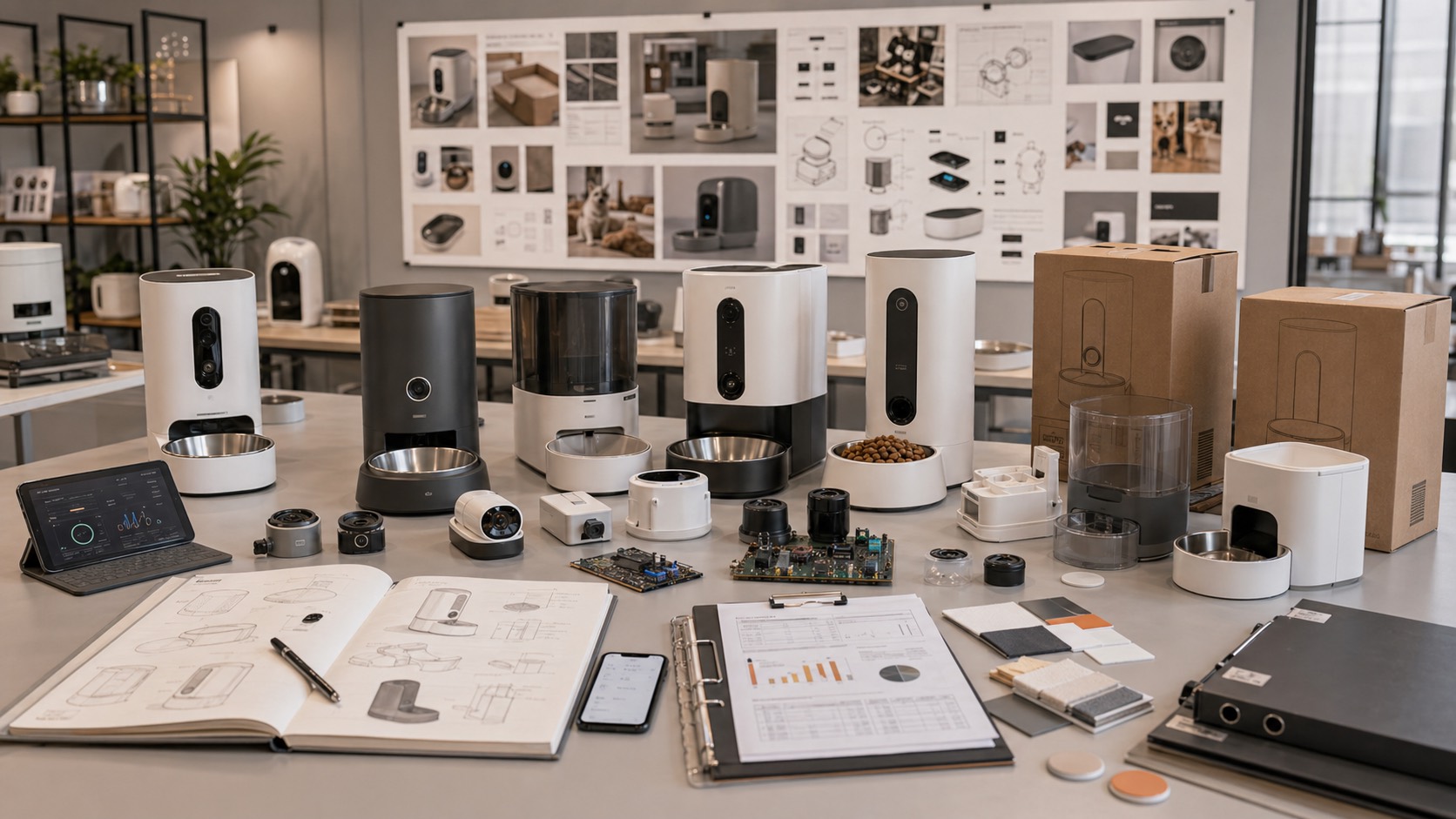
How should buyers use this article?
Smart Pet Feeders Buyer's Guide: Hardware, Firmware, App & Certifications is a PetProcure product knowledge resource for B2B buyers comparing pet product sourcing, OEM/ODM, sampling, QC, packaging, compliance, logistics, and launch planning decisions. Specs that matter when sourcing smart pet feeders in 2026: motor types, capacity, firmware stack (Tuya / Matter / private cloud), certifications, and FOB benchmarks. Use the article to clarify what information to ask a factory or sourcing partner before committing to a sample, tooling, purchase order, or repeat procurement plan. Final product terms still depend on the buyer's target market, MOQ, customization scope, material requirements, certification needs, packaging plan, and delivery schedule.
If you are planning a smart feeder SKU for 2026, the hardware part is the easy conversation. Firmware, app, cloud, and certifications are where projects quietly go off the rails. Here is the full sourcing conversation we run with every OEM partner.
1. Motor & mechanism choices
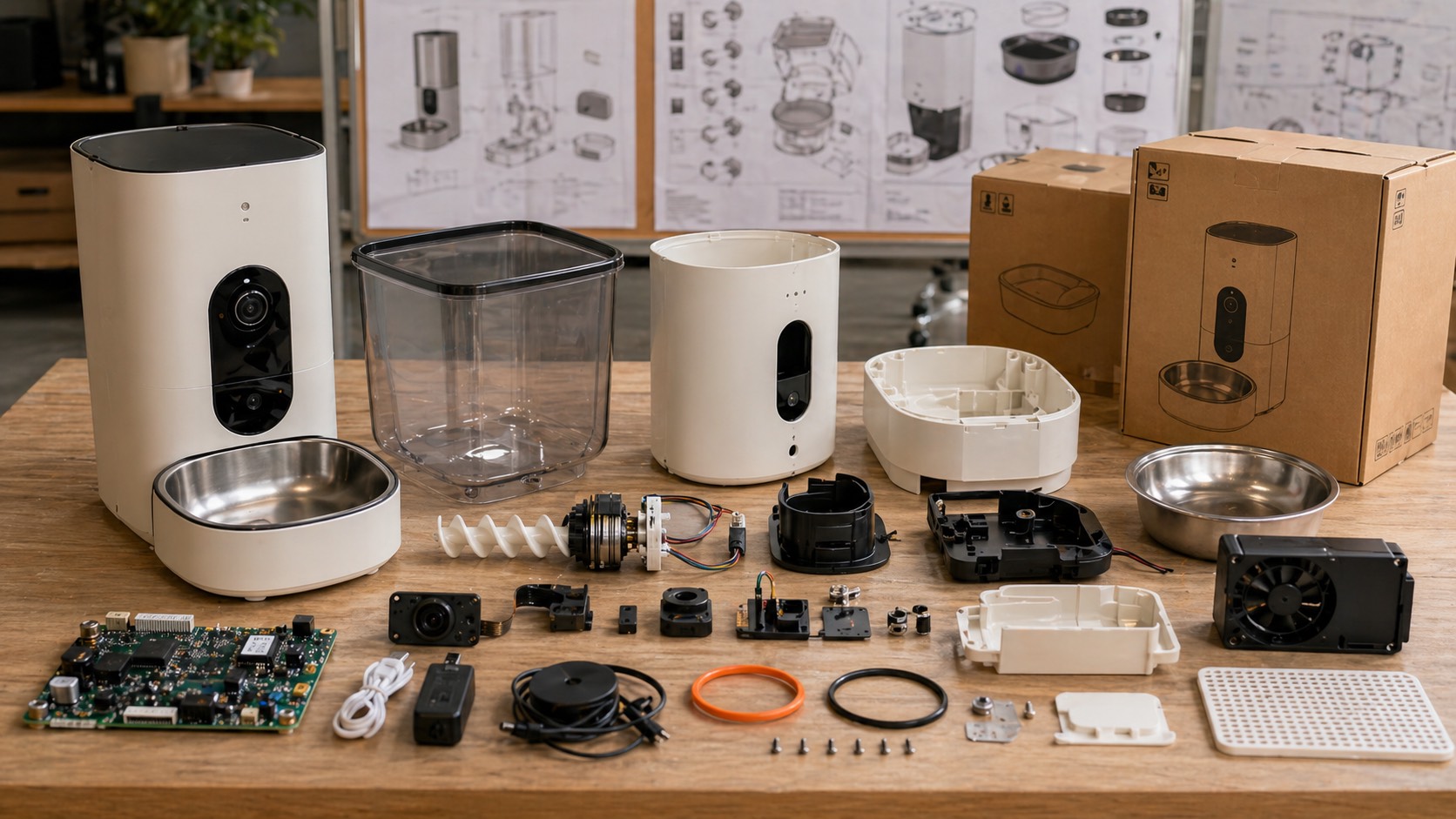
- Stepper motor + auger — most common, good for dry kibble, 3–6L hoppers, precise portion control.
- Twin-auger / paddle-wheel — for freeze-dried, larger kibble, multi-pet homes.
- Roller dispenser — for wet-food single-meal systems, usually paired with ice packs.
2. Hopper & material spec
- Food-grade ABS is standard; PP is cheaper; Tritan is premium and crystal-clear.
- UV-rated plastics matter if the feeder sits near a window.
- Desiccant compartments keep kibble fresh 2–3 weeks.
- Hopper capacity: 3L (single small pet) / 4–6L (typical) / 6–10L (multi-pet or travel).
3. Connectivity stack
- Wi-Fi 2.4 GHz — baseline, works everywhere.
- BLE fallback — schedule without Wi-Fi.
- 4G / LTE-M — premium; travel / vacation homes; adds SIM + regulatory work.
- Zigbee / Matter — future-proofing for smart-home integrations. Matter is table stakes in 2026.
- Audio / video — 1080p camera + mic + speaker for "call your pet"; factor in ISP certification and GDPR.
4. Firmware & cloud options
- Tuya / Aliyun — 4–6 weeks to integrate, USD 0.20–0.80 per device royalty. Fast path.
- Private cloud — your own AWS / GCP; 8–12 weeks dev, full data ownership.
- Matter local control — no cloud for core scheduling; complements either above.
- OTA firmware updates are mandatory for a credible 2-year warranty.
5. App & UX
- Bring a Figma or a written feature list — "like [competitor] but with portion analytics" is a real spec.
- Branded splash screen + color system + icon set.
- Push notifications: meal fed, hopper low, Wi-Fi lost, medication reminder.
- Multi-pet profiles with weight and activity targets are increasingly expected.
6. Certifications you cannot skip (US + EU)
- FCC Part 15 + SDOC for any wireless device going to the US.
- CE-RED + EN 300 328 + EN 301 489 for EU.
- FDA food-contact declaration for hopper and bowl (CFR 21).
- RoHS 2, REACH SVHC for plastics and PCBA.
- CA Prop 65 label review; UKCA if selling UK.
7. How PET & TRADE runs a smart feeder OEM
Brief + NDA (Day 0) → ID concept (Day 7) → 3D + BOM (Day 14) → EVT sample (Day 30) → DVT + certification start (Day 45) → PVT + MP (Day 60). Request the full capability deck below.
Quote a Smart Feeder Project
Send us capacity, connectivity stack, and target FOB. We return a BOM-level quote + 60-day timeline within 48 hours.
Start a Feeder Quote →