Dog Carriers and Car Seats: Safety Standards, Crash Testing & Retail-Ready Claims
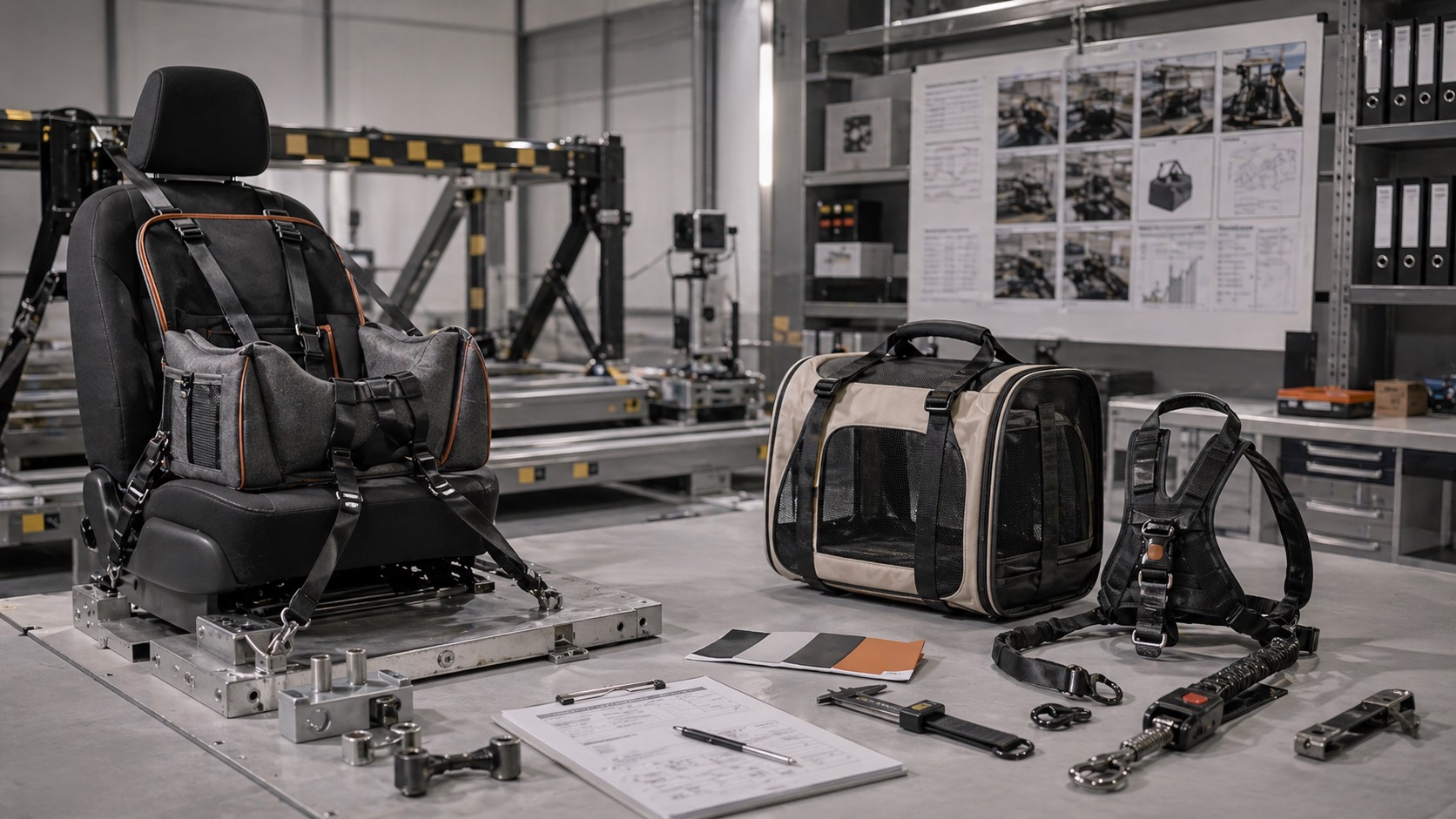
"Crash tested" is one of the most common — and most loosely used — claims in the dog travel category. Recent lawsuits in the US and Germany are changing the rules. If you sell dog car seats, carriers, or seat belts in 2026, here is what you should insist on.
1. The bodies that actually set standards
- Center for Pet Safety (CPS) — US non-profit running voluntary crash-test certification; de-facto Amazon standard.
- FMVSS 213 / ECE R44 / R129 — human child-seat standards; pet products sometimes reference informally.
- EU GPSR — General Product Safety Regulation; every product now needs a responsible person + risk assessment.
- ISO 17025-accredited labs — who should perform your testing.
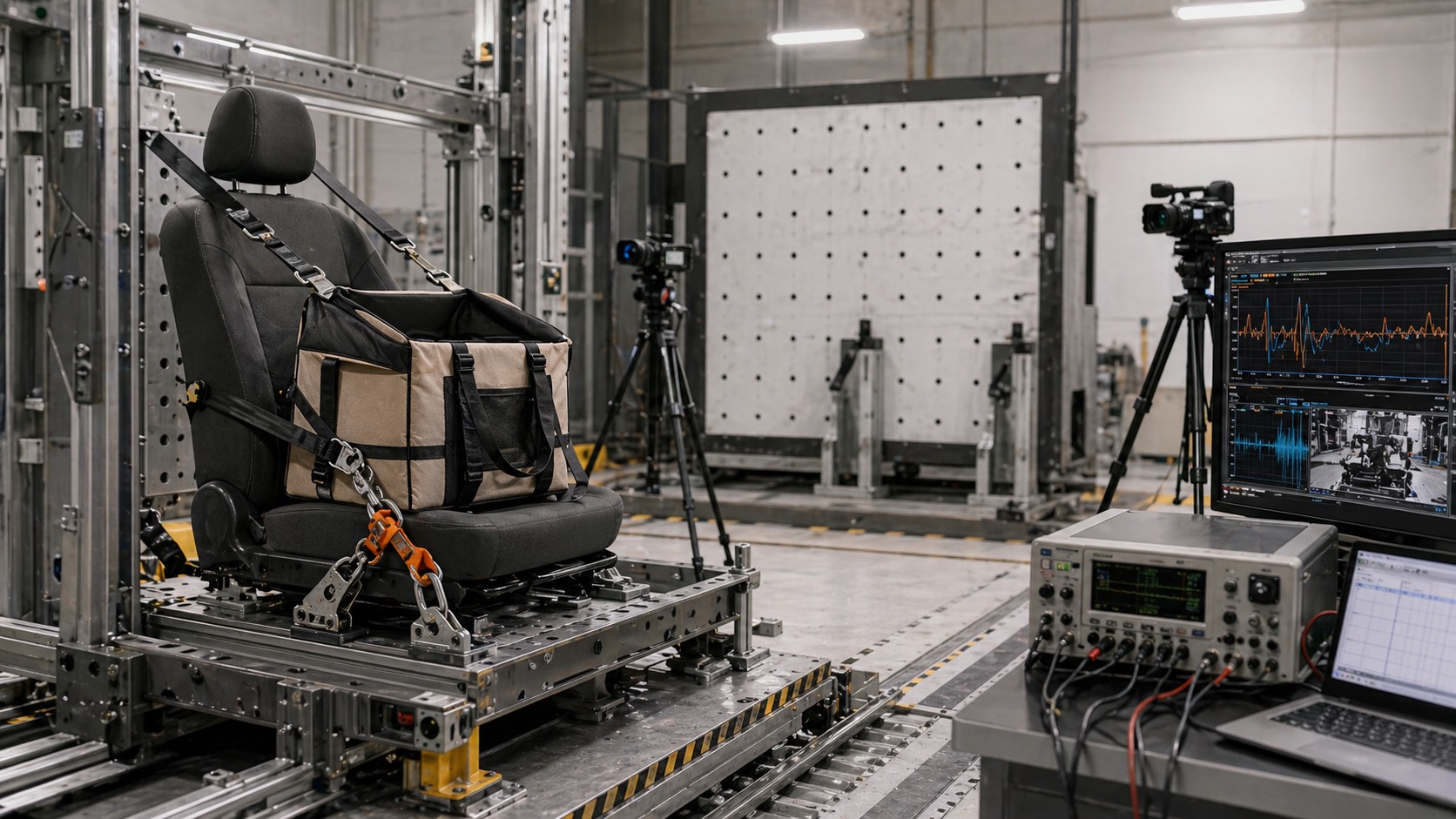
2. What a credible crash test looks like
- Vehicle speed typically 30 mph / 48 km/h (sometimes 50 km/h).
- Weighted anthropomorphic dog test dummies at defined weight classes (10 / 25 / 45 / 75 lb).
- Sled or full-vehicle test with high-speed camera.
- Pass criteria: no structural failure, no ejection, no rotation beyond spec, no harness breakage.
- Third-party lab report with accreditation ID — not a video shot in your factory.
3. Load and harness testing
- Static tensile — often 2,500 N per connection point.
- Buckle release under load.
- Cyclic fatigue — 5,000–10,000 open/close cycles.
4. Flame retardancy & materials
- CA TB 117-2013 — foam and textiles sold in California.
- EN 1021-1/-2 — furniture-adjacent products in the EU.
- REACH SVHC — plastics and coatings.
5. What you can legally say on the package
- "Crash tested" — only with a specific test protocol, speed, and lab ID referenced.
- "Up to X kg" — must match the dummy class you tested.
- "CPS Certified" — only with a current CPS certification number.
- "Meets automotive safety standards" — almost always a legal risk; name the standard.
Retail-ready compliance pack: third-party crash/load test report + CE/UKCA DoC + CA Prop 65 + GPSR responsible person + RoHS + REACH + material disclosure. Missing any one of these blocks entry in at least one EU country in 2026.
6. How PET & TRADE handles travel safety SKUs
Every dog car seat and harness in our Travel & Outdoor line ships with a compliance pack. Crash-test results from ISO 17025-accredited lab partners are available under NDA.
Next Step
Request Crash-Test Reports
We share the full test dataset under NDA: lab ID, speed, dummy class, pass/fail video, load cycles.
Request the Reports →